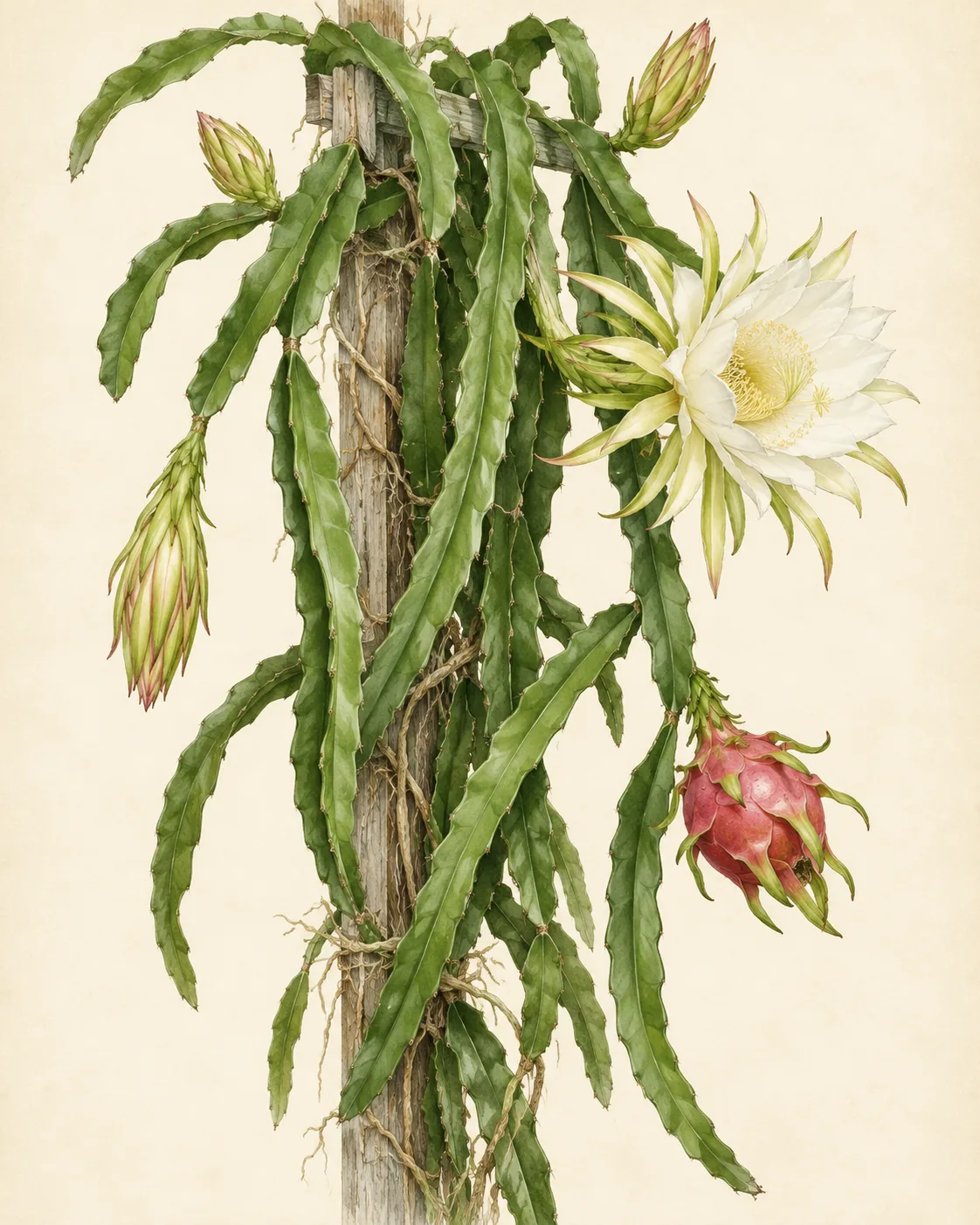
Fleshy stems store water, nocturnal flowers require compatible pollen, and day length interacts with temperature during bud formation. Dragon fruit connects cactus physiology with fruit production and cultivar breeding. [Nobel 2006][Chu and Chang 2020][Li et al. 2022]
In vitro culture uses tissues' capacity for growth and regeneration in a controlled environment. Rapid multiplication nevertheless requires asepsis, deliberate selection of the developmental route, control of material fidelity and a difficult transition to life outside the vessel.
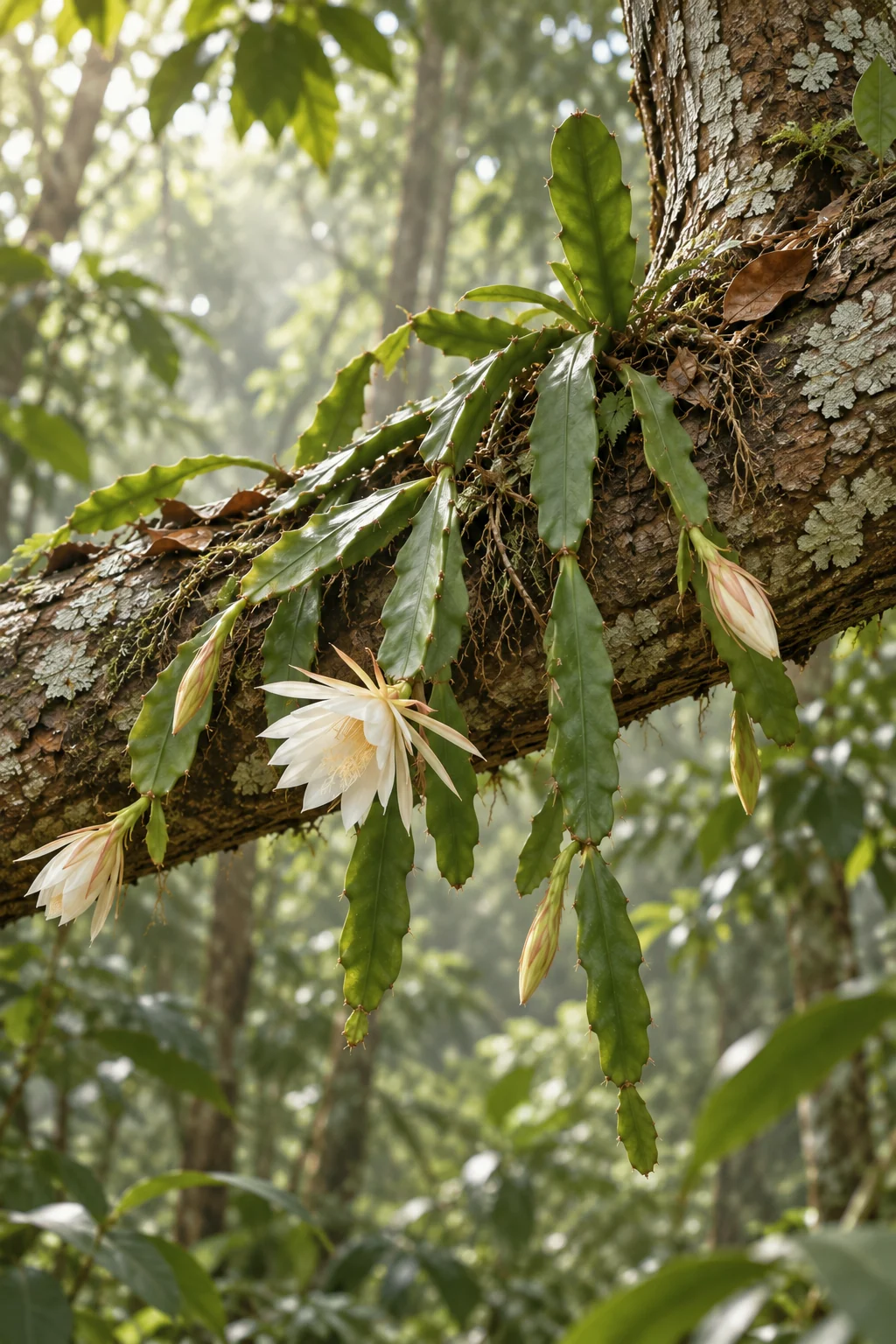
Cacti of tree canopies and humid forests do not live in permanently wet substrate. Their environment combines brief hydration, rapid drainage, organic matter and light filtered through changing leaf cover.
A durable graft physiologically connects scion and rootstock. Wound response, contact between living tissues and restoration of conducting pathways allow shared management of water, minerals and photosynthetic products.
Germination depends on seed-batch quality and the interaction of water, oxygen, temperature and light. Healthy seedling development then requires gradual adjustment of moisture and lighting to the growing root system.
Substrate, container, water, light and temperature jointly determine root conditions. Understanding their relationships allows watering and fertilization rhythms to match plant structure, growth rate and season.
Similar discolouration or wilting may result from different disorders. Diagnosis relies on root condition, the distribution of changes and the history of cultivation conditions. [Fleischer and Schütz 1978]
Insects, mites and nematodes require different management. Identification of the organism and its feeding site precedes selection of a protection method. [Fleischer and Schütz 1978]
Bacterial diseases cannot be excluded because older guides considered them rare. Studies have demonstrated a bacterial cause of cactus rots, and phytoplasmas have been found in plants with abnormal growth. [Mejía-Sánchez et al. 2019]
Frost resistance arises from tissue properties, preparation for cold and weather patterns. Winter hardiness also includes roots, thaws, substrate water and the ability to resume growth.
Seeds of Austrocylindropuntia floccosa and Cumulopuntia ignescens responded differently to lighting. An experiment with fourteen Peruvian cacti allows germination results to be related to seed preparation and incubation conditions. [Jara-Peña et al. 2024]